

Can you work remotely from France either on a long stay visa or Digital Nomad visa? What rules & regulations apply? How can you transition your life to France as a freelancer or self-employed person? Is France a good base for remote workers. How difficult is it to set up a company in France? How will you manage your business when you are living in France? Our guide explains French visa rules for remote workers, overseas employees and digital nomads, plus tax and residency issues.
What I would say at the outset to anybody thinking about relocating to France with their work or business is that France has a couple of rather strange ideas. Firstly, if you live and work here, they expect you to pay tax and social charges. Apparently all those excellent roads, hospitals, schools and public services have to be paid for somehow. Secondly, if you want to move to France, the French authorities want to know that you have enough money to support yourself in France. I know — outrageous concepts.
The French themselves will happily tell you that they are taxed up to their eyeballs. And yes, if you are self-employed in France you will certainly become familiar with cotisations sociales. But when you look at everything in the round — healthcare, infrastructure, education and the general quality of life — I don't think it is quite the horror story that it is sometimes made out to be.
I have been self-employed in France for 20 years, and a large proportion of my friends here are also self-employed. Between us we have run all sorts of businesses and worked with customers in France, the UK and elsewhere. So I am not approaching this simply from the theoretical position of what the regulations say. I've actually had to make a living here, pay French taxes and social charges and deal with the French administration. You just have to be careful, plan your transition in advance and don't blatantly disregard the rules. You can't simply arrive in France, open your laptop and assume that because your customers or your employer are based overseas, none of the French rules apply to you.
But equally, I don't want to give the impression that moving to France as a remote worker or self-employed person is impossibly complicated. It isn't. Lots of people do it successfully.
Working Remotely in France: What Are the Visa Rules?

France has become an increasingly popular destination for people who can work from anywhere. With good internet connections, relatively affordable property outside the major cities and an excellent quality of life, it is easy to understand why somebody might want to swap their home office in Britain, America, Canada or Australia for a house in Provence, the Dordogne or the South of France.
But can you actually work remotely from France?
This is probably one of the most misunderstood aspects of moving to France. A lot of clients who speak to me about moving to France on a long stay visa, will say:
“We will be OK for the financial requirement because I/my partner will continue working remotely in France.”
Unfortunately, it isn't quite that simple.
Unless you are an EU-national, if you are contemplating a move to France, then usually your first step will be to apply for a 6 month or 12 month long stay visa. But these visas are strictly non-working visas. France does have a range of visa options for investors, talent employees and self-employed people, but it is a big step to make this permanent move to France, without first experiencing living in France full-time. There are however a number of blended routes to transitioning to life to France, whilst still earning a living from your professional activity. But you do need to be careful.
Does France have a Digital Nomad visa?

No. France does not currently offer a specific Digital Nomad visa of the type offered by a number of other European countries.
This doesn't mean that remote workers cannot move to France. It just means that you need to use the right immigration route. The visa process in France distinguishes between people coming for private purposes and people coming to undertake professional activity.
The standard 6 or 12 month long-stay visitor visa (VLS-TS Visiteur) is for somebody staying in France for private reasons without undertaking professional activity. Applicants must demonstrate sufficient resources, have accommodation set-up and take out appropriate medical cover. As we outline below, there is no clear guidance about what 'work' activities are permissible in terms of answering work emails or taking calls from clients.
France has separate immigration routes for employees, self-employed people, entrepreneurs and other forms of professional activity. See France-Visas for specific details.
UK nationals - Working in France after Brexit

The brutal truth of Brexit is that it removed the automatic right of UK nationals to simply move to France and work or set up a business. You can still do this, but you generally need the appropriate French visa or residence status beforehand. The shame is that for the younger population, it has severely restricted the opportunity to work a ski season in the Alps. It has made spending a year or two working as an au pair in France much more complicated. And it has put significant obstacles in the way of summer holiday jobs in France.
There are still routes for secondments to France (within a company), student placements, studying and voluntary work. But the simple hard truth is that British people can no longer just move to France and start working without first establishing that they have the right immigration status.
To give you a real example, we work with a representative for a holiday Company here in France, called Steve Jones. Steve had lived in France for 25 years prior to Brexit. He paid all his taxes in France, had a French health card, spoke fluent French, etc. He then got divorced from his French wife and returned to the UK in 2016. In 2022, he was head-hunted to set up a new branch in France for a UK holiday company. He had done a similar role for 10 years prior to leaving France. He literally was the ideal candidate for the job.
The UK holiday company had to apply for a work permit for Steve in France. The process took 18 months. During this time, Steve was coming to France for 3 months and then he had to stay in the UK for the next 3 months. The Company had to show that they had advertised Steve's role in multiple EU countries as well as in France. It was a farce. But this is what Brexit has led to and no UK politician will tell you that this is the new reality.
However, there is a route to be able to move to France and to be able to work (see Pathway to Working in France below)
Can I work remotely in France on a visitor visa?

This is where the subject becomes more complicated. The official guidance is clear that the visitor visa is a non-working visa. What it doesn't provide is a detailed practical definition covering every aspect of modern working life.
For example, it doesn't tell you whether answering an occasional work email, taking a telephone call from your employer or dealing with an urgent problem while you happen to be in France amounts to exercising professional activity.
There is clearly a practical difference between somebody who is taking an extended break in France and occasionally deals with something from work, and somebody sitting at their desk in France from Monday to Friday carrying out their normal job online.
But there isn't an official published allowance of “X hours per week” or “X emails per month”.
I cover some practical advice on what may or not count as 'working in France' on this below. This is particularly relevant for self-employed people and Company owners, where there is often a blurred line between work and normal day-to-day business admin.
If I am self-employed will it be easier to get set up in France?

In many ways, I think somebody who is already self-employed or who works as a freelancer or consultant, can have more flexibility than somebody who is employed full-time by an overseas company.
If you are employed by a UK, American or other overseas company, your employer may have to consider French employment law, payroll and social-security obligations if you start carrying out your normal job permanently from France. Some employers are simply unwilling to take this on.
If you are genuinely self-employed, the question is more about how you structure your existing professional activity correctly once France becomes your home.
There isn't one solution which works for everybody. For some people, setting up a French micro-entreprise may provide a relatively straightforward way of operating. Other businesses will require a different French structure, while somebody who already owns an established overseas company may need advice about how that company should fit alongside their French arrangements (for instance, you could open a French branch/subsidiary of your company, covering just your activities in France, but leaving the main activities (and revenue) outside of France)..
From an immigration point of view, France also has a specific long-stay entrepreneur/profession libérale visa for people intending to establish or undertake genuine self-employed professional activity in France. The activity must demonstrate its economic viability and you must be able to demonstrate sufficient resources, at least equivalent to the French minimum legal wage for full-time work. See Service Public – Carte de séjour requirements.
For many freelancers, consultants and business owners, the real challenge isn't “Can I work in France?” but rather:
“How do I take the business and income I already have and structure it properly so that I can live and work in France?”
And that is a much more manageable question that I cover below.
France Entrepreneur Visa: Requirements for Freelancers & Self-Employed Professionals
If you want to move to France and to set up a new business or work within your profession, then you are able to apply for a special type of carte de sejour which will be issued under the category “entrepreneur/profession libérale” (a residence category for entrepreneurs and self-employed professionals, including people working in certain regulated and unregulated professions).
If you are planning on setting up a new business in France, then you must be able to demonstrate the economic viability of your project. So this would entail providing a detailed business plan with financial projections and/or demonstrating that you have sufficient savings or other income sources to support you.
 We work in France with an International Accountancy firm, AUGEFI. The company has a specialist division which helps ex-Pats to set up business in France and to assist individuals looking to invest in France. Jennifer Goube, is a Partner of Augefi. She explains that when individuals are looking to apply for a self-employed visa, especially where this involves buying or establishing a new business in France, certain requirements need to be considered. She states that:
if the business is in an existing field such as a Gite business or Internet Marketing, then it is often a good idea for the business plan to highlight the average earnings for comparable businesses, ideally supplied by a trade body or a French Government/European Union statistics organisation. If it is an entirely new start-up business, then the financial projections will need to encompass some market analysis and a detailed sales plan (to back up the income projection figures).
If you want to move to France and continue in your existing self-employed profession (either working in France or working abroad from a French base), then you must be able to prove that you have sufficient financial resources i.e. the equivalent of the minimum legal wage in France for a full-time worker.
This category of self-employed profession is termed in France a 'profession libérale '. Generally, it involves mainly service-based occupations. Sometimes these professions involve a minimum qualification requirement in order to practice and may be subject to a professional code of conduct. Typical 'professions' include: medical occupations (doctors, dentists, midwives, pharmacists, veterinary surgeons, nurses, physiotherapists), law related professions (lawyers, auctioneers, bailiffs, notaries) and technical professions (land surveyors, architects, chartered accountants). The French Government publish a list of these regulated occupations which are overseen by an administrative body called ENIC-NARIC France (ENIC-NARIC professions règlementées).
In addition to this, there are a number of unregulated professions which may or may not have a qualification requirement, but generally require a certain amount of expertise or specialist knowledge and require some track record and experience. This may include IT workers, designers, writers, trainers, translators and private tutors.
Source: French Property News.
If you will be setting up an independent sole trader company in one of these profession libéral activities, then in addition to satisfying the minimum earnings thresholds, you will also need to prove that you meet the professional requirements in terms of qualifications/diplomas as well as any other conditions. France as a country takes much more seriously the concept of 'professionalism' than other countries. It is not simply the case that you can open up an office and pin a sign to the door. You really need to prove your competence to trade.
 If you require assistance on setting up a business in France or you would like to discuss the requirements relating to a self-employed visa or Talent Passport in France, then please contact Jennifer Goube, Partner on +33 467 186 201.
Does the type of business make a difference?
You know, I often think about this. Does it make it easier to get an Entrepreneur visa for France if you are an established professional with an international customer base which you want to continue working on from France? Does it make it harder if you are looking to set up a fresh business in France - or God-forbid - set up as a professional here and compete with existing French businesses!
I am not a visa specialist, but I have lived here for 20 years and I come across a lot of our clients who have applied/are applying for the Entrepreneur visa as a route into France. You hear good and bad experiences. For some people the visa application sails through and for others they go through numerous re-writes of their business plans and a number of different applications. And heaven help you should you use the wrong industry sector code number on your visa application - you will be sent to the back of the queue.
Now, I could be reading too much into this. It may simply be that somebody with an established business and an international customer base can provide more convincing evidence of stable future income than somebody starting a completely new business in France.
But if there is one piece of advice I would give, it is this: stick to what you know and what you can demonstrate.
If you have spent 15 years working as a consultant, photographer, designer or other professional, build your application around that experience. Show your previous work, existing customers, contracts and the income you have already generated. If most of your customers are outside France, explain how you intend to continue serving them from your new French base.
If you are planning to start a completely new business in France, particularly one serving the local market, you need to do your homework. Demonstrate that you understand the market, have the necessary experience and qualifications, and have a realistic plan for attracting customers and generating income.
Don't invent a business to fit a visa application. Build a visa application around a credible business.
These are just my personal observations. Every application is different, and I would strongly recommend working with an immigration specialist who deals with French visa applications on a daily basis. I always direct people to Nicole Hammond, because I have known her since we arrived in France 20 years ago and this is what she does every day of the week. So she knows her onions so to speak. FAB Insurance also offer assistance as does a company called Renestance - but from what I hear, they can be expensive.
A three-stage pathway to moving to France
Many people who contact us aren't yet certain whether they want to move to France permanently. They want to try France first.
I think it is useful to regard the move as potentially having three stages.
Phase 1 – Trying out life in France
The first phase is probably the most difficult to give clear advice about, because I can't give you a black-and-white rule about exactly what work you can and cannot do while you are living in France on a visitor visa.
This is particularly difficult if you are self-employed, a consultant or run your own business. I understand this from my own experience: when you run a business, work tends to become part of normal life. You answer an email, take a telephone call, check that something has been done, pay a bill or deal with a problem. It isn't always easy to draw a neat line between life admin and work.
Unfortunately, the official guidance doesn't draw that line for you either. There is no published rule saying that you can answer five emails a week, spend two hours dealing with your business or take an occasional call from a customer. So I don't think anybody can sensibly give you an exact limit.
What you can do is look realistically at what you are actually doing while you are in France.
If you are taking a year away from the day-to-day running of your business, but occasionally have to deal with an administrative matter or speak to somebody back home, that is clearly a very different situation from sitting at a desk in France for eight hours a day, five days a week, running your business exactly as you did before you moved.
The further you move towards the second situation, the harder it becomes to argue that you are simply a visitor living in France from your own resources. I often draw the distinction between if you are glancing at emails in your flip flops and taking 2 hour lunches, then you should be OK. If you are chained to your desk and being online 8 hours a day, then you won't be. I am not sure that distinction will stand up in court though!
So during this first phase, don't look for some clever number of hours that you can work without anybody noticing. Ask yourself the much more useful question:
Am I occasionally dealing with the unavoidable admin that comes with my working life, or am I actually carrying out my normal job or running my business from France?
If the honest answer is the latter, then you need to start looking at a status which allows you to undertake professional activity in France.
And this isn't only about your visa. If you are regularly carrying out your professional activity from France, you can potentially create French tax and social-security obligations. If you are an employee of an overseas company, there can also be implications for your employer.
Phase 2 – Making your business work from France
If your first year convinces you that France is where you want to live permanently, this is where you can start putting together a longer-term plan.
A lot of our clients have successfully made this transition. If you are already self-employed, work as a consultant or run your own business, you may actually have more flexibility than somebody who is permanently employed by an overseas company.
You already have the skills, customers and income stream. The question becomes how you can structure that activity properly once France becomes your permanent base.
That may involve establishing a French micro-entreprise, using another French business structure, or retaining an existing overseas company alongside your French arrangements. France also has the entrepreneur/profession libérale immigration route specifically for genuine self-employed and professional activity.
This is the stage where it is worth speaking to a French accountant or business adviser. You aren't asking them “How can I get away with working from France?” You're asking a much more productive question:
“I have an established business and customers. I now want to make France my permanent home. What is the best way to structure my business and income in France?”
Phase 3 — Move onto the appropriate French residence status
If you decide to remain in France, you then need to make sure that your residence status corresponds with what you intend to do next.
A French long-stay visa has a maximum validity of one year. France-Visas confirms that someone wishing to remain beyond the validity of their long-stay visa must obtain the appropriate residence permit. France-Visas
For someone who wants simply to continue living from their own resources without working, that may mean continuing under visitor status.
If you intend to work or operate a business, you need to investigate the residence status appropriate to that professional activity.
In practical terms, this means starting your research well before the end of your first year, rather than waiting until your visitor visa is about to expire.
Frequently Asked Questions - Remote Working and Digital Nomads in France

Below are some of the questions I am most frequently asked by clients who are considering moving to France while continuing to work or run a business. The focus is predominantly on freelancers, consultants and self-employed people because, apart from retirees, these make up a large proportion of the people we speak to who are considering a permanent move to France.
Does France have a Digital Nomad or remote work visa?
No. France does not currently have a specific Digital Nomad visa or remote work visa of the type offered by some other European countries.
Instead, the appropriate immigration route depends upon what you intend to do in France. There are different routes for visitors, employees, entrepreneurs and self-employed professionals. If you intend to carry out professional activity while living in France, you need a visa or residence status which permits that activity.
Can I work remotely in France on a visitor visa?
The French long-stay visitor visa is officially intended for people living in France for private purposes without undertaking professional activity. The difficulty for modern remote workers is that the official guidance does not provide a detailed definition covering every occasional email, telephone call or piece of business administration.
I have discussed this grey area in more detail above. There is no published allowance of a certain number of hours or days that you can work remotely on a visitor visa.
Can I work remotely in France for a UK company?
 Having a UK employer does not automatically solve the problem. If you remain an employee of a British company but perform your job regularly from France, there may be immigration, employment, social-security and tax consequences for both you and your employer.
This is why somebody planning to work remotely in France for a UK company should discuss the arrangement with their employer before moving.
The same principle applies if you are working remotely in France for an American, Canadian, Australian or other foreign company. The important question isn't simply where the company is registered or where your salary is paid. Your physical presence and where the work is being performed can also matter.
Can an American, Canadian or Australian work remotely from France?
The same basic principles apply to other non-EU nationals. Having an employer or clients in the United States, Canada, Australia or elsewhere does not by itself mean that your professional activity is taking place outside France.
If you intend to live in France while continuing to work, you need to consider both your immigration status and the potential French tax and social-security consequences.
What if I travel back to the UK regularly for work?

Travelling back to the UK to meet customers, attend meetings or undertake projects may be relevant when establishing where your professional activity is actually taking place.
But simply flying back to Britain periodically doesn't automatically turn work that you regularly perform from your home in France into UK-based work.
Again, look at the reality of the arrangement rather than simply where the company is registered.
What if I only work two or three days a week?
The same principle applies.
There isn't a published rule saying that working one or two days is acceptable but working five days isn't.
If you regularly perform paid professional activity while physically living in France, you should investigate whether your immigration status permits it.
I own my UK company – does that make a difference?

Not necessarily.
Simply owning a company registered in Britain does not mean that all of your professional activity takes place in Britain.
If the business genuinely operates independently of you — for example, it has employees and management carrying out its day-to-day operations while you receive dividends or other investment income — that is a different situation from personally running the company every day from your laptop in France.
If you are actively managing the company, dealing with customers, providing services and carrying out the work while living in France, professional, tax and social-security questions can arise.
Can I become a contractor instead?
Changing the label from employee to contractor doesn't by itself solve the problem. If you are physically in France carrying out professional services as a self-employed contractor, you are still undertaking professional activity.
However, being genuinely self-employed may open up a much more appropriate French immigration route, including the French entrepreneur/profession libérale immigration route..
Can I set up a Company (micro-entreprise) in France?
For many self-employed people, the French micro-entrepreneur system can be an attractive way of operating a small business, consultancy or freelance activity.
But a micro-entreprise is a business/tax/social-security structure, not an immigration status. Being able to register a business does not itself give a non-EU citizen the right to live and work in France. You still need an immigration or residence status that permits the activity. This is an important distinction for British, American, Canadian, Australian and other non-EU remote workers.
What about EU citizens working remotely in France?
 The immigration position is different for citizens of the EU, EEA and Switzerland because they generally do not need a French visa simply to move to France. That does not mean that tax, social-security and employment rules disappear.
If you become resident in France and carry out your work from France, you still need to consider the French rules applying to your employment or self-employed activity.
What if my partner is an EU citizen?
If you are not an EU citizen yourself but your husband, wife or qualifying partner is, this can make a considerable difference to your ability to live and work in France.
For example, if you are British but married to an Irish, German, Dutch or other EU citizen who is moving to France, you may be able to obtain residence in France as the family member of an EU citizen.
Importantly, this can also give you the right to work in France without needing the normal work permit required by many non-EU nationals. This can include taking employment in France or setting yourself up as self-employed and establishing a business.
So if one partner in a couple has an EU passport, I would investigate this route before assuming that the non-EU partner needs to apply for a standard visitor visa. It may provide a much more straightforward route to living and working in France. The precise route however will depend on the relationship and the EU citizen’s circumstances (different rules can apply where the EU spouse is French).
Do I have to close my UK company if I move to France?
Not necessarily. Moving to France does not automatically mean that an existing overseas company has to be closed.
However, where you live, where you actually manage the company and where its business activity is carried out can have tax and other consequences. If France is becoming your permanent home while you continue to own or manage an overseas company, I would discuss the structure with an accountant who understands both French and cross-border business arrangements.
Can I move to France as a freelancer or self-employed person?
Yes. France has immigration routes specifically intended for genuine self-employed and professional activity. One of these is the entrepreneur/profession libérale VLS-TS.
For many established freelancers, consultants and business owners, the important question is therefore not whether they can ever work from France, but how their existing professional activity should be structured once France becomes their home.
Do remote workers pay tax in France?
Potentially, yes. Your visa status and your tax residence are two separate issues.
The fact that your employer or clients are overseas, or that your income is paid into a foreign bank account, does not by itself mean that you have no French tax obligations.
Tax residence depends upon your individual circumstances and cross-border employment or business ownership can make matters more complicated. For anything beyond a straightforward situation, I would recommend speaking to a French accountant or cross-border tax specialist. The French tax authority also provides information on tax residence in France.
Will I have to pay French social charges if I work from France?
Potentially. If you are carrying out professional activity from France, French social-security contributions can become relevant even where some or all of your customers are overseas.
The position depends upon whether you are employed or self-employed and whether any international social-security arrangements apply to your circumstances. If you are planning a permanent move, this should form part of the advice you obtain when deciding how to structure your work or business in France.
Can I move to France first and decide what to do with my business later?
If you qualify for a long-stay visitor visa without needing to work to finance your stay, spending an extended period in France can be an excellent way to discover whether living here permanently really is for you.
That is the basis of the three-stage approach I describe above. Use the time to experience everyday life in France and investigate how your business or professional activity could be structured if you decide to remain.
If you subsequently intend to work or operate your business from France, make sure that you investigate the appropriate professional and residence status before beginning that next stage.
Is France suitable for remote workers?
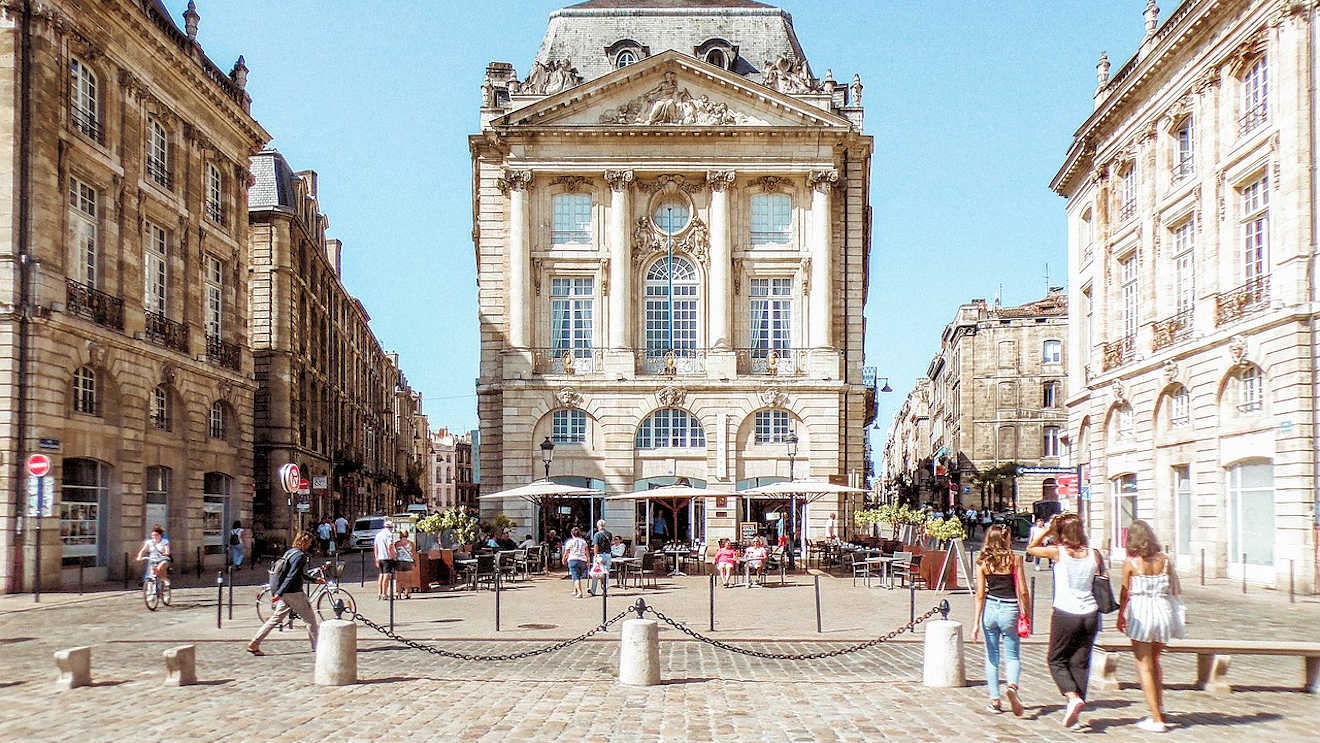
Absolutely — provided that you have the appropriate legal status to work here.
And this is an area where France can work extremely well. You don't necessarily need to live in Paris, Lyon or another large city. Fibre broadband is now available in many French towns and villages, meaning that remote workers can choose somewhere primarily for its quality of life rather than proximity to an office.
For somebody planning to work remotely, I would look particularly for:
- reliable fibre or high-speed internet
- a proper desk, office or practical workspace
- comfortable heating for winter working
- shops, cafés and everyday services nearby
- good road or rail connections
- reasonable access to an airport if you need to travel for meetings
- a rental available for several months rather than only the summer season.
That is exactly why we have created our Remote Workers collection of long-term rentals in France.
Finding long-term accommodation for remote working in France

Finding somewhere to live can actually be one of the biggest difficulties for somebody arriving in France. Traditional French landlords and rental agencies commonly require substantial documentation and may want evidence of French employment, French income or other financial guarantees which somebody who has only just arrived in the country simply cannot provide.
Our approach is different.
Long Term Rentals in France specialises in furnished properties available for periods of approximately 3–12 months. This can provide a useful landing base while you decide where you want to live permanently, look for a property to buy, improve your French or establish your future working arrangements.
For remote workers we particularly look for properties offering reliable internet, practical living/working space and/or good access to transport and local services.
See our selection of remote-worker friendly rentals in France