

So, I will start with the good news. If your dream has always been to live or retire in France, then this is still perfectly possible. Yes, Brexit has made this slightly more complicated, but basically British citizens now broadly follow the same immigration procedures as other non-EU nationals such as Americans, Canadians and Australians. We deal with hundreds of people each year who are moving to France for 6 months, 12 months or longer. So you are not alone
For visits of up to 90 days British visitors can normally travel visa-free. If you want to live in France for longer, however, you will normally need the appropriate French long-stay visa or residence status. The process is perfectly manageable, but choosing the correct visa is important—particularly if you intend to work or continue working remotely while you are in France.
I will start by explaining the rules for 90-day visa-free travel to France, before looking at the options for 6 month and 12 month long-stay visas, remote working in France and the rules surrounding French residency.
90 Day visa free travel to France

I think most people seem to know that they can live in France for up to 90 days without a visa. That part is quite simple. What is less well understood is exactly how those 90 days are calculated and where else you can travel during that period.
Firstly, this is not simply a French rule – it covers the whole Schengen Area - so applies to 29 European countries. So if you have spent your full 90-day allowance in France, you cannot simply leave France and spend the next few weeks in Spain, Greece, Portugal or another Schengen country. No long weekends in Barcelona, Bucharest or Prague either. Any other trips you make within the Schengen Area, including business trips before or after your stay in France, also count towards your 90-day allowance.
Secondly, it is not a fixed 90 days in + 90 days out. Your allowance is calculated on a rolling period of 180 days.
So you could come to France for 30 days, return to the UK for 30 days and then come back to France for another 60 days. Similarly, if you had spent a total of 80 days in France during the relevant 180-day period, you would still have 10 days of visa-free travel available to use in France or elsewhere in the Schengen Area.
I accept that this can get quite complicated (there are even Schengen calculator apps for your phone to help you keep track of your days). But what I hope to show you in this article is that if you are planning to move to France, it doesn't have to be this complicated. If you obtain the appropriate 6 or 12 month long-stay visa, you don't have to plan your life around the 90-day visa-free allowance.
Having lived in France for 20 years, I can honestly say that French bureaucracy can sometimes be a nightmare. But applying for a long-stay visa is much more straightforward than many people imagine.
Applying for a long-stay visa France

If you simply want to visit France for a holiday or stay for a couple of months, then you do not need a visa for doing so. In that regard, nothing much has changed with Brexit (although you will need to take additional steps concerning driving in France, bring your pets, mobile phones, insurance, etc).
However, if you want to stay longer than 90 days at a time, then you will need to apply for a visa. A long stay visa is basically a sticker or a stamp which is entered onto your passport by the French Consulate in your home country, which allows you to enter France and stay here for pre-determined time. The process is quite simple and only costs €99. There are 2 visa options, both of which relate to temporary stays in France (of 3 to 12 months):
- a 6 month long stay visa - generally appropriate where you are certain that you will not remain in France beyond 3 to 6 months maximum.
- a 12 month long stay visitor visa - which provides a route for somebody intending to remain in France for a longer period. This type of visa is also renewable.
Both types of visa are intended for people staying in France for private purposes without undertaking professional activity in France (see Remote Working in France below).
6 month Temporary long stay visa

The temporary long stay visa is valid for up to 6 months. The visa specifically excludes you from working in France (even if you are working remotely). The visa is non-renewable after the 6 months ends. If you need or want to stay in France after the 6 months ends, then you will have to exit the country and then apply for the 12 month long stay visa to re-enter the country. This visa is intended for people who want a long holiday in France or have another social or family reason for living in France for up to half a year.
The benefit of this temporary long stay visa is that normally, you will not be classed as resident in France for tax purposes (so you will not be obliged to complete a French tax return documenting your worldwide income).
To obtain a temporary long stay visa for France you will need to:
- obtain rental accommodation for the duration of your stay in France
- have proof that you have sufficient income to support yourself during your stay
- take out travel/health insurance or possess a Global Health Insurance Card (which replaced the EHIC European Health Card)
- have a valid passport with at least 15 months before expiry
A lot of the visa application process has been transferred online (through the website France-Visas) and it is actually quite straightforward. In certain circumstances you will need to visit your local French Consulate in your home country, but I have not heard of this happening often.
A lot of customers contact me about the sufficient financial resources part of the 6 month visa for France. Unfortunately, France-Visas does not currently publish a specific minimum income figure for the 6-month temporary long-stay visa. However, as a useful guide, we would suggest allowing for around €1,500 per month per person, or approximately €9,000 for the whole of the 6 month stay. This can normally be demonstrated through income, pensions, savings and bank statements.
12 month long stay visa

The 12 month long stay visa is very similar to the 6 month temporary visa. It enables you to come and go from France as often as you want. Apart from when you first arrive in France, your passport will not be stamped each time you leave or come back to France. You just need to show your visa and you will be waived through customs. The 12 month long stay visa is intended for people who are coming to France for an extended break or a sabbatical, or people thinking about moving to France longer term and want to try it out first. It only costs €99 euros and you would not normally need an immigration lawyer to help you; the application can be completed through the official France-Visas system.
[NOTE: If you are planning on working in France or setting up a business in France, then you would normally bypass this visa and apply directly for a French residency card (carte de sejour). You will probably need the assistance of an immigration lawyer for this as it is more complicated.]
The main differences between the 6 month and the 12 month visa are:
- the 12 month visa can be renewed
- you may need to set up private medical insurance or use the UK S1 or S2 Form to cover yourself in France (the GHIC Global Health Card may or may not be applicable - I have heard conflicting stories)
- towards the end of the 12 months, you can then apply for French residency (carte de sejour), which depending on your circumstances, will be granted for either 1 year, 2 years, 4 years or 5 years
- You will need to show that you have sufficient income to support yourself in France (which as of 1 January 2026, is €1,867.02 per month gross income or €22,404.20 gross annual income). This relates to each individual. A couple will need to show income of around €3,650 gross income per month. If you have children, then you will need to show that you have income equivalent to 50% of the income requirement per child (in addition to your own income). You can also use savings in lieu of income (please see Income requirements for French Residency & Long Stay Visa for France for more details)
French visa application process
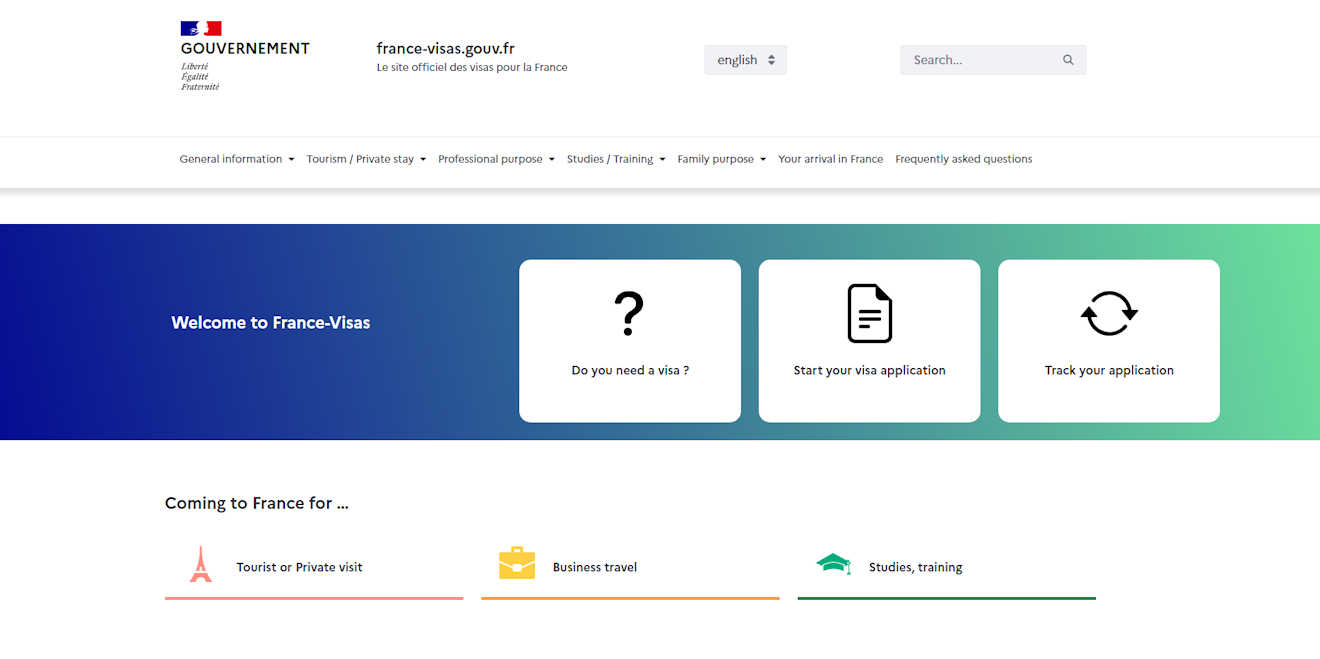
The visa application process for the 6 month visa and the 12 month long stay visa is the same. It takes about 5 minutes to complete the visa application process (although assembling the supporting documentation may take longer).
- You need to access the visa application portal France- Visas
- You will need to complete the visa application form. This will need to be printed out and signed & date. The application form will ask you for your details (name, date and place of birth, etc) and also your reasons for travelling to France. You will also have to sign a declaration promising not to exercise any professional work activity in France (although you can continue to work remotely from France). The original of the application form will need to be sent to the French Consulate (or their outsourced administrator), together with the application receipt number issued by France-Visas..
- You will need to provide a number of supporting documents;
-
- a scan of your passport. The passport needs to have been issued less than 10 years ago and contain at least two blank pages. The passport should be valid for the length of the long stay visa plus a period of 3 months beyond the date that you will leave France.
- 2 passport-sized photograph (see photo requirements Schengen visa).
- If you are not a national of your country of residence: proof that you are legally resident in that country (e.g. residence permit).
- 3 months of bank statements showing your full name and address, and proving that you have enough funds for the whole duration of the trip. If you are financially supported by your spouse/partner you will also need to provide a copy of your marriage certificate and the bank statements of your spouse/partner.
- Proof of accommodation in France (a rental agreement or an attestation d'herbergement signed by the Landlord) or if you own a property in France a copy of the Title Deeds of the house.
- a copy of your travel insurance policy (which must cover all expenses for medical, hospital treatment and repatriation costs for medical reasons) and or a health insurance policy or Global Health Insurance Card (see GHIC application process)
-
UK applicants can submit an application up to 180 days before travel. France-Visas recommends allowing at least 20 working days. Once you have submitted your application via France-Visas, you will have a personal client area where you can follow the progress of the visa authorisation.
Can I work Remotely from France on a long stay visa?

This is probably the issue which causes the most confusion for people who contact us about moving to France. A lot of the clients that I speak to about the income requirements for a French long stay visa will often say:
". . . we will be OK for the financial requirement because me/my partner will be working remotely in France . . ."
You have to be very careful with this assumption because it is not quite that simple. France does not currently have a general Digital Nomad visa which allows somebody to move to France and continue their normal overseas job online. The 6 month and 12 month long stay visas are strictly non-working visas and the wording on the France-Visas website is quite clear:
" . . . you are applying on the basis that you will not undertake professional activity while living in France . . ."
But what actually counts as “working” in France?
This is where things become less clear. The official guidance does not provide a practical definition. It doesn't tell you whether answering an occasional work email, taking a telephone call from your employer or dealing with an urgent problem while you happen to be in France amounts to exercising professional activity. Also, if you are self-employed, it is not clear if working on projects or dealing with long-standing customers, counts as work
The safest way to look at it is to ask where you are actually carrying out your job.
If you intend to return regularly to the UK, to visit clients, attend meetings, work on projects, then it is clear that your work is primarily based in the UK. And I would certainly advise people to keep records of those trips back to the UK. Similarly, if you are on leave or an extended break, the fact that you occasionally receive an email or telephone call from work does not necessarily mean that you have moved your employment to France.
But, if you plan to be sat in France working 100% online doing your UK job - working your normal hours, attending online meetings, deal with customers, managing staff or carrying out your normal duties - then you could get into trouble. Or more specifically, your UK employer could get into trouble. You should not assume that the fact your employer and salary are located outside France, makes this compatible with a visitor visa.
Similarly, if you run your own business, simply having the company registered in the UK or another country does not necessarily mean that the work you perform while living in France is regarded as taking place outside France.
What if I need to continue working to afford to live in France?
This is the difficult question, because for many of the people who contact us, continuing to earn an income is essential to making their move to France possible.
If you intend from the outset to work regularly from France, then you should investigate a visa or residence status which permits professional activity rather than relying on a visitor visa. This is particularly important if you are an employee. Immigration is only one part of the issue. Regularly working from France can create French employment, social-security and tax implications for both you and your employer. And given that this is France, these social charges (for your Employer) could be an eye-watering amount.
If you are self-employed, there may be a more straightforward option. France has a long-stay entrepreneur/profession libérale visa for people intending to establish or carry on a genuine self-employed or professional activity in France. Applicants need to demonstrate the viability of their activity and sufficient resources.
So the important thing is to choose the correct route before you move, rather than arriving on a visitor visa and assuming that you can sort out your working status later.
I always advise clients that they should regard their move to France as a two-step process. Firstly, if you have sufficient savings or passive income to meet the sufficient financial resources requirements of the long stay visa for France, then this makes the visitor-visa route much more straightforward because you are not relying on income from work carried out during your stay. The visitor visa then allows you to take a step-back from work or your business and focus on your life in France. Move around, improve your French, experience as much as you can - before committing to a permanent move.
The second step is then when you decide that you want to make a go of it in France. That is when you can explore setting up a business and applying for French residency. It will certainly be simpler if you are self-employed (Brexit has certainly made looking for work in France much more difficult).
Working remotely in France
We have covered this complicated subject in much more detail in our guide to Remote Working in France: Visas, Tax & Rules for Remote Workers, including overseas employment, self-employment, occasional work contact, tax and social-security issues and the different visa options available.
Applying for French Residency after Brexit

If you arrive in France from 2027 onwards (on a long stay visitor visa) and you decide that you want to live permanently in France, then you are still able to apply for French Residency. If you decide that you want to remain in France beyond your first year, you should normally start the application process for your next residence permit around 2 months before your 12 month long stay visa expires - in other words, after you have been living in France for approximately 10 months you can then apply for a Residency Permit in France (which is called a Carte de Sejour).
The Carte de Sejour is a physical card which contains your photograph and signature. It is normally issued for a longer period than the visa. There are different categories of Carte de Sejour - covering students, self-employed, retired (non-working), looking for work, etc. I have heard of different cases where people have been issued with a carte de sejour for 1 year, 2 years, 4 years or 5 years. I think that it all depends on the circumstances and which category of Carte de Sejour you apply for. Even if the carte de sejour is only issued for 1 year, you just need to reapply to renew it each year.
France does not have an American-style Green Card system or an Australian-style Permanent Residency. You can either live in France on a 6 or 12 month long stay visa; a residency permit or you can apply for French Nationality. There is nothing in between. We use the term French Residency to cover anybody who applies for a residency permit (carte de sejour). The residency permit can be issued for 1 year, 2 years, 4 years, 5 years or 10 years (in exceptional circumstances). Once the residency permit expires, you will need to apply for a new one. So in effect, all of us Brits living here in France are only really temporary residents. There is no such thing as permanent residency in France. You are either here on a temporary permit or you become a French national.
The first common misconception about French Residency, is that people often believe that there is a single residency permit. In actual fact, there are multiple residency permits/Long Stay Visas in France.
The Carte de Sejour, or Titre de Sejour as it is legally known, is the residency application process which applies to all nationalities, including Europeans. The Carte de Sejour was first introduced in France in 1926 and it regulated all foreign workers, requiring them to carry an identity card. There are 5 different types of residency :
- a long stay visa which allows individuals to live and in certain circumstances, work in France (sometimes referred to as 'Talent Passports'). The visa is usually issued for a period of 1 year, but longer periods can be agreed;
- a temporary residency permit, usually lasting 6 months and covering various non-work related reasons for residing in France (such as asylum seekers, voluntary work, people caring for sick relatives);
- a multi-year residency permit (carte de séjour pluriannuelle) which is usually issued to current holders of a long stay visa and enables them to stay in France for a further period of up to 4 years; *
- 10 year resident card (carte de résident), for people who have five years of continuous, legal residence in France
* The multi-year residency permit has a number of categories depending on your reasons for living in France:
- student - you're undertaking a recognised course of study or are on a study placement.
- employed - you are employed by an individual or a company and have a contract of employment.
- self-employed - you run a business or small enterprise on any of the fiscal regimes, including as a microentrepreneur.
- job search or business creation
- private or family life (for British Nationals married to (or dependents of) French nationals or British Nationals with existing Residency Permits)
The only thing which has changed following Brexit, is that the minimum income requirements for the carte de sejour have increased (from around €650 per month (for a single person) to €1,867.02 per month gross income) and you now need to meet a minimum level of French proficiency (but this is still only really holiday French).
Applying for a Carte de Sejour in France
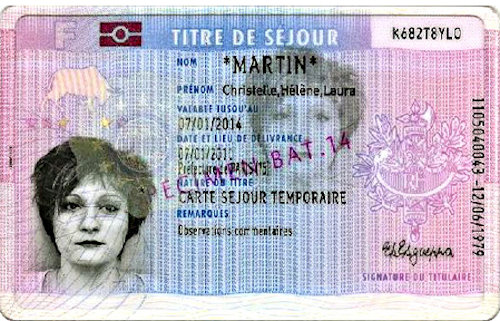 To apply for French residency (or as everyone calls it, the Carte de Sejour), you are required to make an appointment at your local town hall or Préfecture (local government headquarters) and present the following information:
- your passport and visa/existing residency permit (original documents and a photocopy)
- 3 or 4 passport photos,
- Proof of permanent address in France (EDF electricity bill or the house deed of sale (acte de vente) for a house bought in France or a signed lease agreement for the French address)
- Birth certificate (for children less than 3 months old) and official French translation,
- Information on your marital status, and if necessary, on those of your spouse and children (usually marriage and birth certificates with French translation)
- Proof of sufficient and stable financial resources for 5 years (pay slips, tax notice, certificate of pension payment, bank certificate, property income, etc.)
- Declaration on honour concerning the continuity of your stay in France (except exemption by the administration)
For non-European Union citizens, there is also a requirement to meet a minimum French language proficiency of Level A2 (when applying for a first multi-year residence card), while those applying for a 10-year resident card (carte de résident) must demonstrate B1 level proficiency.
Once you have deposited these documents, you will then receive a document called a récépissé from the Préfecture that proves you are in the process of applying for your Carte de sejour. Normally, you are not allowed to leave France until you receive your actual Carte de sejour (which can take anywhere between 4-8 weeks).
The French residency permits also allow the holder to travel freely throughout the Schengen zone countries for periods of up to 3 months (without the need for further visas).
Living in France after Brexit
So hopefully, I have been able to reassure you that it is perfectly possible to still move to France after Brexit and to continue living in France if you decide to stay here. Brexit has made the process a bit more complicated (and expensive), but this is where the rubber hits the road with Brexit. I never believed that there would be some calamitous, cliff-edge impact following Brexit. Instead there will just be these small bureaucratic hurdles that the UK and British people will need to overcome. But for the average person, we can continue to live in Europe, it just means that we have more forms to fill in, we have to have more money behind us and we need to be a bit more organised.
Moving to France in 2027 . . . ?
We make the process of renting a house in France very straightforward. We don't require a stack of paperwork like a lot of French rental agents. We simply ask for copies of your ID (passport) and some evidence of ability to pay the monthly rent (which could be a copy of your bank statement, employment contract, bank reference or copies of your current rental/home loan payments). You can secure the property by paying a 1 month deposit (which becomes your security deposit for the tenancy). For more information about how to find a house for rent in France:
|
|
|
|
|
|
|
|
|






 If you need assistance with planning your move to France and getting set up when you arrive, we are happy to recommend the services of HAMMOND HELP, a French Relocation & Insurance agency run by Nicole Hammond. Nicole's team and network of external consultants, can help you with everything from applying for long stay visas for France, setting up a business in France, opening bank accounts, arranging health insurance in France, organising car & home insurance and completing your French tax return.
Hammond Help can be contacted by email at: Hammond Help by phone (English speaking line): +33 (0)6 32 07 84 13 and through Facebook: Hammond Help
You can also book a personal 30 minute telephone consultation with Nicole to answer all your questions in relation to your visa application and relocation to France. Visit Visa & Relocation Consultation to reserve a date and time for your consultation.