
If you are buying a property in France in 2027 then you need to be aware of the real estate taxation costs involved. Often the French property taxes can have a big hit on people's budgets. Paddy Gibbins, from Artaxa Immo Real Estate, gives the low down on French Property taxes. This is important to know from a property investment perspective, because these costs are in addition to the house purchase price. You also need to be aware of the French tax structure when it comes to Capital Gains and Inheritance laws, because these will affect your business model.
French Property taxes - purchasing
When buying an existing house in France, you should generally budget around 7–8% of the purchase price for property purchase taxes, Notaire fees and administrative costs. For example, on a house costing €250,000, this would amount to approximately €17,500–€20,000 in additional purchase costs.
For qualifying new-build properties, the equivalent costs are usually lower, at around 2–3%. This is because new properties sold by developers are generally subject to VAT, normally included in the advertised purchase price (see Building a house in France: buying off-plan for more details).
These figures are approximate and can vary depending on the department, the type of property and the circumstances of the purchase.
Notary fees
A Notary is basically a specially trained property lawyer. The Notaire, unlike property conveyancing lawyers in other countries, is also responsible for calculating all the property taxes due. The best way to see a Notaire is to imagine them as a tax collector. They will draw up the house purchase contract and they may provide you with advice over boundary disputes, etc. But this is not their primary role and if you have particular questions it is advisable to engage a Notaire to specifically undertake this work for you (rather than assuming it will automatically be included in the purchase process). Notary fees are calculated in bands at varying percentages from 5 per cent for the first €3,000 and then incrementally down to 0.3 per cent on the portion exceeding €120,000. These fees are quite variable so your financial advisor should outline them to you in advance of the purchase (see the Role of a Notary).
French Capital Gains Tax
Capital Gains Tax in France (or plus-value immobilière in French) is generally charged when you sell a second home or investment property for more than you originally paid. The standard income tax rate is 19%, with social charges generally adding another 17.2%, giving a combined headline rate of 36.2% on the taxable gain. Additional tax can apply to certain large gains, while some non-residents benefit from different social-charge arrangements.
For example, a taxable gain of €50,000 could produce a tax bill of approximately €18,100 before any ownership allowances or other reliefs.
But don't panic, there is some good news. In France, there are mechanisms to reduce the taxable gain according to how long you have owned the property. After 22 years, the gain is normally exempt from the 19% income tax, and after 30 years, it is also exempt from social charges.
Also, qualifying principal residence is generally exempt from Capital Gains Tax, regardless of how long you have owned it.
This is one reason why buying and quickly reselling property in France can be expensive, particularly when you also consider the original purchase taxes and any renovation costs.
Taxe Fonciere
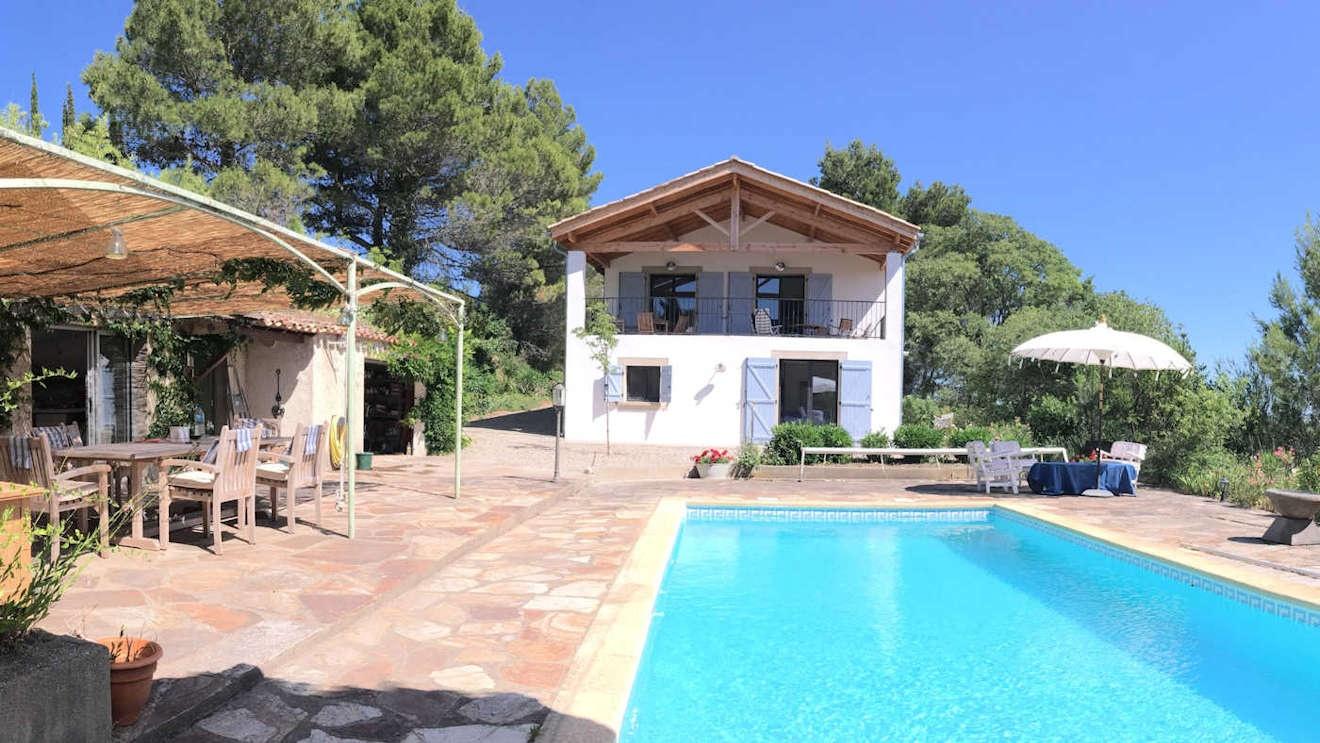
Taxe foncière is an annual property ownership tax payable by owners of French property, whether the house is used as a principal residence, a second home or a rental property. The tax is calculated using the property's cadastral rental value, with a 50% allowance applied to the assessed value of built property, and the relevant rates set by local authorities.
The amount varies considerably between communes. For example, a four-bedroom villa might have an annual taxe foncière bill of around €1,200–€1,600, although larger properties or those in communes with higher tax rates can cost considerably more. Extensions, swimming pools and certain other improvements can increase the property's assessed value and therefore its annual tax bill.
Before buying, always ask the seller or estate agent for a copy of the latest taxe foncière bill. This is far more reliable than estimating the tax from the size of the house.
Taxe d'habitation in France – second homes

One of the biggest changes to French property taxes in recent years has been the abolition of taxe d'habitation on principal residences. Since January 2023, this tax is no longer payable on a property used as your main home in France. However, taxe d'habitation still applies to second homes, including holiday properties owned by foreign buyers. The amount varies considerably depending on the location, the property's assessed rental value and the rates set by the local authorities.
In some popular areas of France, particularly coastal resorts and towns where housing is in short supply, local councils can impose an additional surcharge on second homes. This can increase the municipal share of the tax by as much as 60%. The reason is partly financial, but also reflects growing concern about the number of second homes in areas where local residents struggle to find affordable accommodation. Some communes have increased their rates significantly in recent years.
If you are buying a second home in France, it is therefore important to check both the annual taxe foncière and taxe d'habitation before purchasing. These costs can vary substantially between neighbouring towns and villages.
Property owners must also declare the occupancy status of their residential properties through the French tax authorities' Gérer mes biens immobiliers service, and update that information when relevant circumstances change.
If an Owner owns 2 properties in France - a main property and a second holiday home - the Owner cannot simply switch his/her principal residence to the house with the most expensive taxe d'habitation. As the website Droit Finances notes:
A principal residence is the place where the tax payer usually resides and where he/she has the centre of his family and professional interests. To check the veracity of the information provided by the taxpayer with several dwellings, the tax authorities can, for example, take into account their energy consumption, their place of work, their children's school, etc. in order to determine the place of his principal residence.
SOURCE: Principal residence definition
Wealth taxes in France

France has a property wealth tax known as Impôt sur la Fortune Immobilière (IFI). This applies when a household's qualifying net property wealth exceeds €1.3 million. I have to say, that American clients especially are frightened to death about this Wealth Tax. I once had a client with an annual income from investments of around $5 million. I found an online calculator of the wealth tax and I went back to him and said
". . . really good news, you are eligible to a number of deductions and the tax calculator shows you will pay only €2,500 euros a year . . .".
I never heard from him again!
For French tax residents, the calculation can include property assets held in France and overseas, subject to exemptions and international tax agreements. Non-residents are generally assessed on their qualifying French property assets.
The tax is calculated using progressive rates ranging from 0.5% to 1.5%, with the first €800,000 falling within a 0% band once the liability threshold is exceeded.
For example, a household with €2.5 million of net taxable property wealth would have an initial IFI calculation of approximately €10,190 per year, before any applicable reductions or reliefs.
Although IFI is unlikely to affect most foreign buyers purchasing a modest holiday home, it is an important consideration for anyone investing in several French properties or buying a substantial estate.
Tax on rental income
If you rent out a property in France, the rental income must generally be declared to the French tax authorities, even if you live overseas. For non-residents, French income tax is normally calculated using the progressive tax scale, subject to minimum rates of 20% and 30% depending on taxable income. However, a lower average rate may apply where the taxpayer provides details of their worldwide income.
The tax treatment also depends on whether the property is rented furnished or unfurnished. For example, under the standard micro-BIC regime for eligible long-term furnished rentals, a 50% tax allowance is applied to rental receipts. If you receive €12,000 in annual rental income, only €6,000 would normally be subject to income tax and applicable social charges under this regime.
Holiday rentals can be treated differently, particularly under the revised rules for furnished tourist accommodation. Property owners may also have to collect tourist tax (taxe de séjour) and pay local business taxes (CFE).
For more information, see our guide to the Renting out furnished property in France (LMNP tax scheme) in France.
If you do decide to rent out your property on a semi-regular basis, it may also be worth your while to set it up as a mini-business in France (as a Micro-Enterprise). If you do set up a business in this format then you will obtain three years exemption from business rates. The way I would look at this is that you may not want all the hassle of setting up a French business (even though it is very easy to do), but one massive benefit it does provide is that it can lead to you receiving your French health coverage (carte vitale) and this is an enormous benefit.
French Inheritance tax
French inheritance tax can range from 5% to 60%, depending on the relationship between the deceased and the beneficiary and the value of the inheritance.
Children generally benefit from a tax-free allowance of €100,000 from each parent, subject to the rules governing previous gifts. Above this allowance, inheritance tax on transfers from parents to children is charged at progressive rates ranging from 5% to 45%.
Surviving spouses and common law partners (PACS) are generally exempt from French inheritance tax, although PACS partners normally need a will to inherit.
Inheritance tax can be considerably higher when property passes to distant relatives or unrelated beneficiaries, with rates potentially reaching as high as 60%.
French property can sometimes be purchased through an SCI (Société Civile Immobilière), which may provide advantages for managing family ownership and succession planning. In broad terms, each member of the family will own a share in the SCI company, which in turn is the official owner of the property. If a family member dies, his/her shareholding is then distributed to the remaining shareholders. The asset being transferred has no value, so there is no inheritance tax to pay. The SCI Company will involve some annual costs, but with an accountant that knows what he or she is doing, this can be offset against any annual tax to pay. However, an SCI does not automatically eliminate inheritance tax. If you are buying property in France with your spouse, partner or children, it is sensible to discuss inheritance arrangements with a Notaire before completing the purchase.
If you are interested in any of these measures to reduce potential inheritance tax, I can certainly recommend that you speak to Sebastien Giordano and Jennifer Goube from the French Accountancy firm AUGEFI, based in Sete, France.
Contact details:
Website: www.frenchbusinessadvice.com
Email: French Business Advice
Telephone: +33 4 67 18 62 01
Explore this topic
Thinking of buying a house in France? These guides cover the French property market, the buying process and the practicalities of finding somewhere to live while you search.
Buying Property in France: Complete Guide for 2027
Our comprehensive guide to the French house-buying process, including legal steps, purchase costs, notaires and practical advice for overseas buyers.
French Property Market 2027
Discover what is happening to French house prices, regional property markets and the outlook for buyers in 2027.
French Mortgage Rates
Find out about mortgage rates in France, borrowing requirements and financing a property purchase as a foreign buyer.
How to Rent a House in France Long Term
Why renting for a few months can help you discover the right village, explore the local area and avoid making an expensive buying mistake.