
Buying property in France: guide contents
- Is 2027 a good time to buy property in France?
- French house prices and property market trends
- Where are the best places to buy property in France?
- How to buy a house in France: the buying process
- French mortgages and financing your purchase
- Property taxes and the costs of buying in France
- Renovating or building a house in France
- Buying an investment property in France
- Buying a holiday rental property in France
- Final checklist: choosing the right French property
Buying a house in France can be one of the most exciting decisions you make. Whether you are planning to retire to the French countryside, relocate with your family, buy a holiday home or invest in a rental property, there is a great deal to consider before signing on the dotted line.
We have put together this guide to buying property in France to help you understand the French housing market, identify the best places to buy, calculate your budget and navigate the buying process. Drawing on our experience of living and working in France, we have also included links to more detailed articles covering everything from French mortgages and property taxes to renovation projects and holiday rental investments.
The aim is simple: to help you make an informed decision and avoid some of the mistakes that foreign buyers can make when purchasing a house in France.
1. Is 2027 a good time to buy property in France?
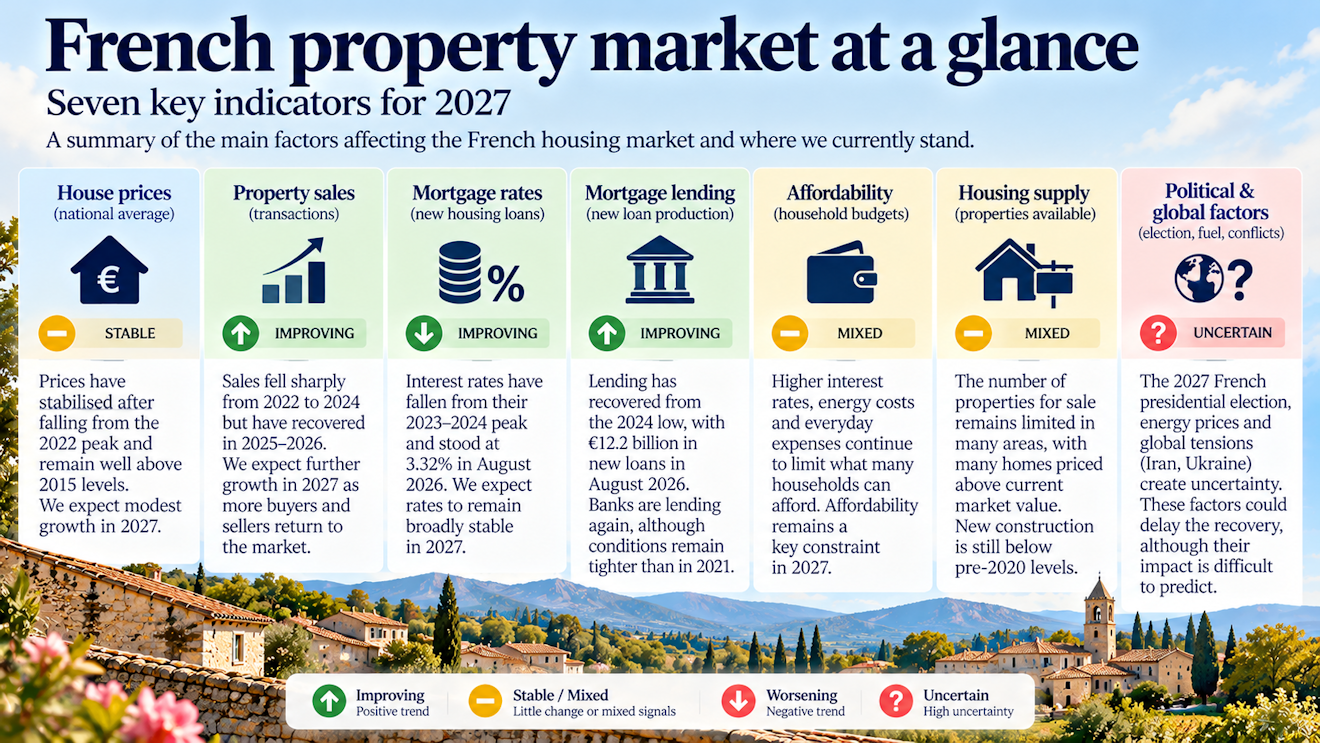
The French property market has experienced considerable changes over recent years, with fluctuations in house prices, mortgage interest rates and the number of property transactions. But is 2027 a good time to buy a house in France?
My view is that there are opportunities for buyers, but I would be cautious about making sweeping predictions about the French property market. National statistics can give you an indication of where the market is heading, but they rarely tell you what is happening in a particular town or village.
One of the biggest problems I see is that some sellers still have unrealistic expectations about the value of their properties. They often base their asking price on what they need to buy their next house, or on the advertised prices of neighbouring properties. But those houses may have been sitting on the market for two or three years without selling.
For buyers, this can create opportunities to negotiate, particularly where properties have been advertised for a long time. However, you need to understand the local market and compare actual completed sales rather than relying on asking prices.
If you are planning to live in France for the next ten or fifteen years, buying the right house in the right location at a sensible price is far more important than trying to predict exactly when the market will reach its lowest point.
Explore this topic:
2. French house prices and property market trends
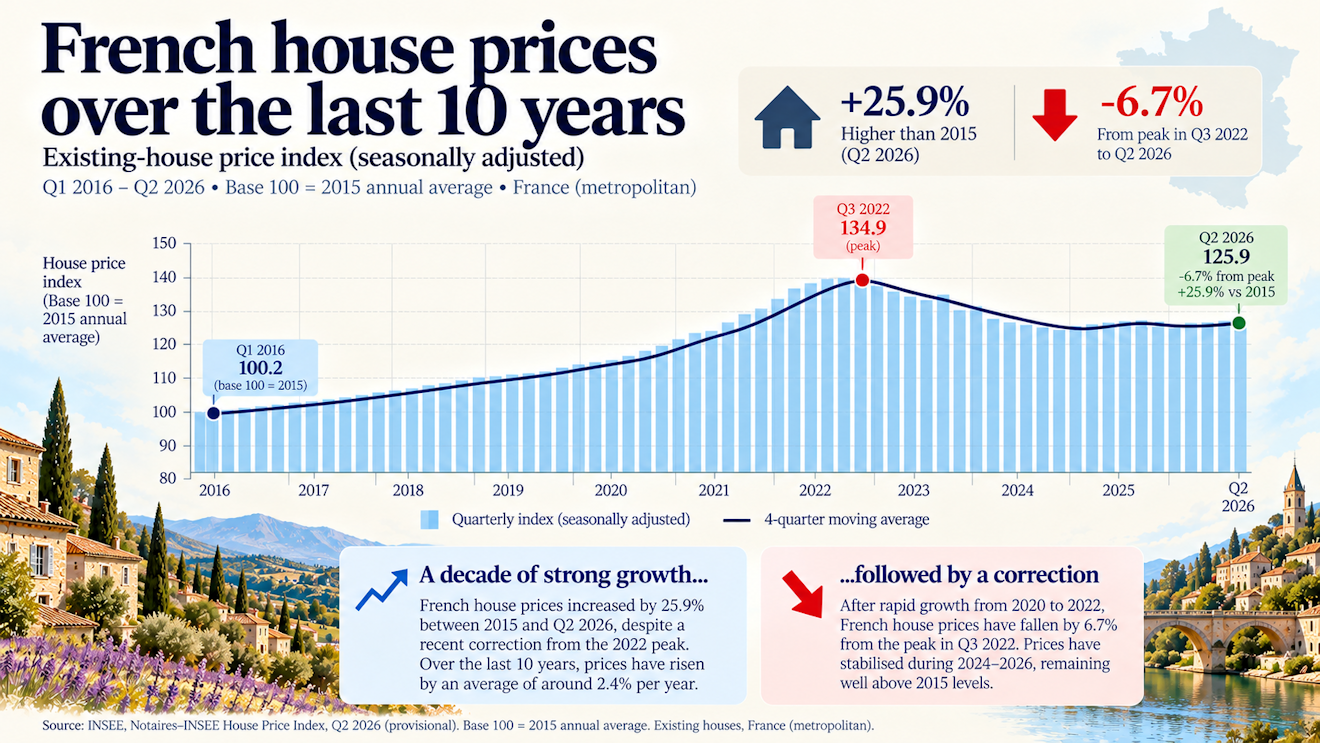
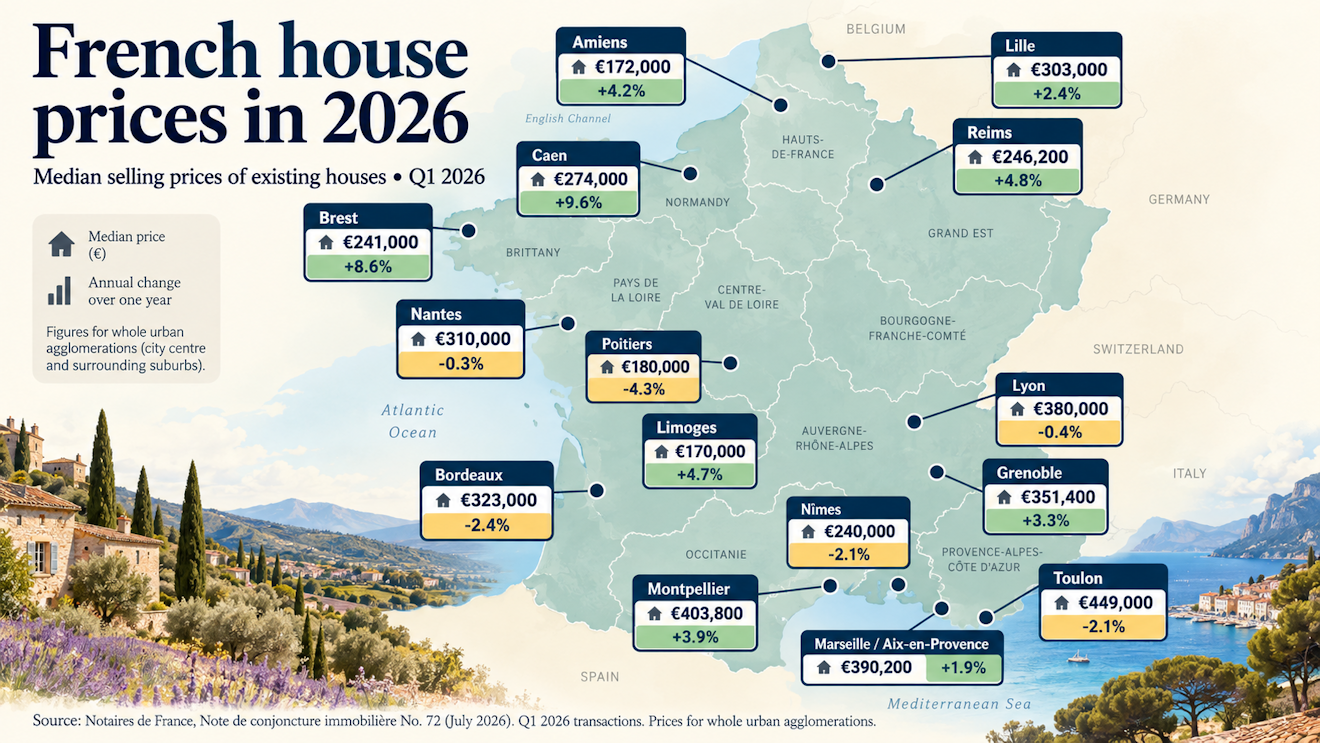
One of the first questions prospective buyers ask is how much a house costs in France. The answer varies enormously depending on the region, the type of property and whether you are buying in a major city, coastal resort or rural village.
There are still parts of France where you can buy a traditional village house for considerably less than the price of a small apartment in Paris, Nice or Cannes. However, cheaper does not necessarily mean better value.
Property prices in the Côte d'Azur and popular areas of Provence remain relatively high, reflecting their international appeal and limited supply. Further west, parts of the Languedoc, the Aude and the Pyrénées-Orientales can offer much more affordable alternatives, often within easy reach of the Mediterranean coast.
The important thing is to distinguish between advertised prices and actual selling prices. Estate agents can provide useful local comparisons, but I would also look at completed sales recorded by the French notaires and the government's property transaction data.
A house advertised at €350,000 is not necessarily worth €350,000. If comparable properties have recently sold for €280,000, you need a very good reason to pay substantially more.
Look beyond the headline price per square metre. Condition, location, outdoor space, energy efficiency and the number of similar properties for sale can all affect the real value of a house.
Explore this topic:
3. Where are the best places to buy property in France?
Location is probably the most important consideration when buying a property in France. A beautiful house in the wrong location can quickly become a very expensive mistake.
France offers an extraordinary range of places to live, from the Mediterranean coast and the vineyards of Provence to the Atlantic beaches, historic towns and quieter rural regions.
I would start by narrowing your search to five broad areas:
- Provence and the Côte d'Azur: Mediterranean sunshine, attractive villages and excellent facilities, but generally higher property prices.
- Languedoc and Occitanie: Historic towns, vineyards, beaches and good transport connections, with some excellent-value alternatives to Provence.
- Dordogne and Nouvelle-Aquitaine: Traditional stone houses, beautiful countryside and attractive market towns, particularly popular with British buyers.
- Brittany and Normandy: Coastal towns, green countryside and established communities, with a different climate and character from Southern France.
- Loire Valley and Burgundy: Historic towns, vineyards and rural properties, often offering good value away from the main tourist centres.
But choosing a region is only the beginning. I would pay particular attention to the nearest town, local shops, healthcare, schools, transport connections and whether the area remains active throughout the year.
Some French villages are wonderful during July and August but almost deserted in January. Others have thriving local communities, weekly markets, restaurants and services that operate throughout the winter.
My advice is to choose the location first and the house second. You can renovate a property, but you cannot move it closer to the shops, beaches or airport.
Explore this topic:
- Where to Buy Property in France in 2027
- Best Places to Live in France
- Where to Buy a House in France: Marseillan
- Places to Buy a House in France: Aniane
- Nézignan-l'Évêque: Property Hot Spot
4. How to buy a house in France: the buying process
The process of buying property in France is different from that in the UK, Ireland or many other countries. It involves estate agents, preliminary contracts, legal checks and a French notaire who oversees the transaction.
Once you have found a suitable property, the first stage is usually to make a written offer (offre d'achat). If the seller accepts, the next step is normally to sign a preliminary purchase agreement, often called the compromis de vente.
This is an important legal document. It sets out the agreed purchase price, the conditions of sale, financing arrangements and the proposed completion date. Buyers normally benefit from a statutory ten-day withdrawal period after receiving the required documentation.
The notaire then carries out the legal checks, including ownership, planning matters, mortgages registered against the property and other issues affecting the sale. Completion normally takes place several weeks or months later, depending on the circumstances.
One thing I would strongly recommend is arranging an independent structural survey, particularly when buying an older French property. The mandatory French diagnostic reports provide useful information, but they are not a substitute for a proper building survey.
You should also establish whether the advertised price includes estate agency fees and obtain a full estimate of acquisition costs before signing.
Explore this topic:
5. French mortgages and financing your purchase
If you are planning to finance your purchase with a French mortgage, it is worth understanding how French banks assess borrowers, particularly non-residents and foreign buyers.
Mortgage rates, deposit requirements and lending criteria can all affect your purchasing budget.
French banks generally take a cautious approach to lending. They will examine your income, existing loans, regular financial commitments and ability to make monthly repayments. Borrowers will also normally need to provide detailed financial documentation, and mortgage insurance is commonly required.
Foreign buyers can obtain mortgages in France, although non-residents may face stricter conditions and higher deposit requirements than people already living and working in the country.
I would establish your borrowing capacity before arranging property viewings. There is little point falling in love with a €400,000 villa if the bank will only lend you enough to buy a €280,000 house.
If your income or savings are held in pounds, dollars or another currency, exchange-rate movements are another important consideration. Even relatively small changes can make a significant difference to the final purchase price.
Finally, don't forget to include acquisition costs, insurance, moving expenses and any immediate renovation work in your calculations. The amount you can borrow is not necessarily the amount you should spend.
Explore this topic:
6. Property taxes and the costs of buying in France
The purchase price is only part of the cost of buying a house in France. Buyers also need to budget for acquisition costs, notaire fees, property taxes, insurance and the ongoing expense of maintaining a French home.
For an existing property, acquisition costs commonly amount to around 7-8% of the purchase price, although the precise figure depends on the property and transaction. These costs include taxes, registration charges and the notaire's remuneration.
Once you own the property, you will normally be responsible for taxe foncière, the annual property ownership tax. Depending on how the property is occupied, taxe d'habitation may also apply to second homes, although it has been abolished for principal residences.
There are also practical running costs to consider: buildings insurance, heating, electricity, water, internet, garden maintenance and swimming pool servicing.
Older houses can be particularly expensive to maintain. A large stone farmhouse may look like a bargain compared with a modern villa, but heating costs, roof repairs and general upkeep can quickly change the financial picture.
If you intend to rent out your property, you will also need to consider the taxation of rental income and any additional local requirements.
My advice is to prepare a realistic annual ownership budget before buying. The cheapest house to purchase is not always the cheapest house to own.
Explore this topic:
- French Property Taxes in 2027
- Buying a House in France: Complete Checklist
- Tax on Rental Income in France
7. Renovating or building a house in France
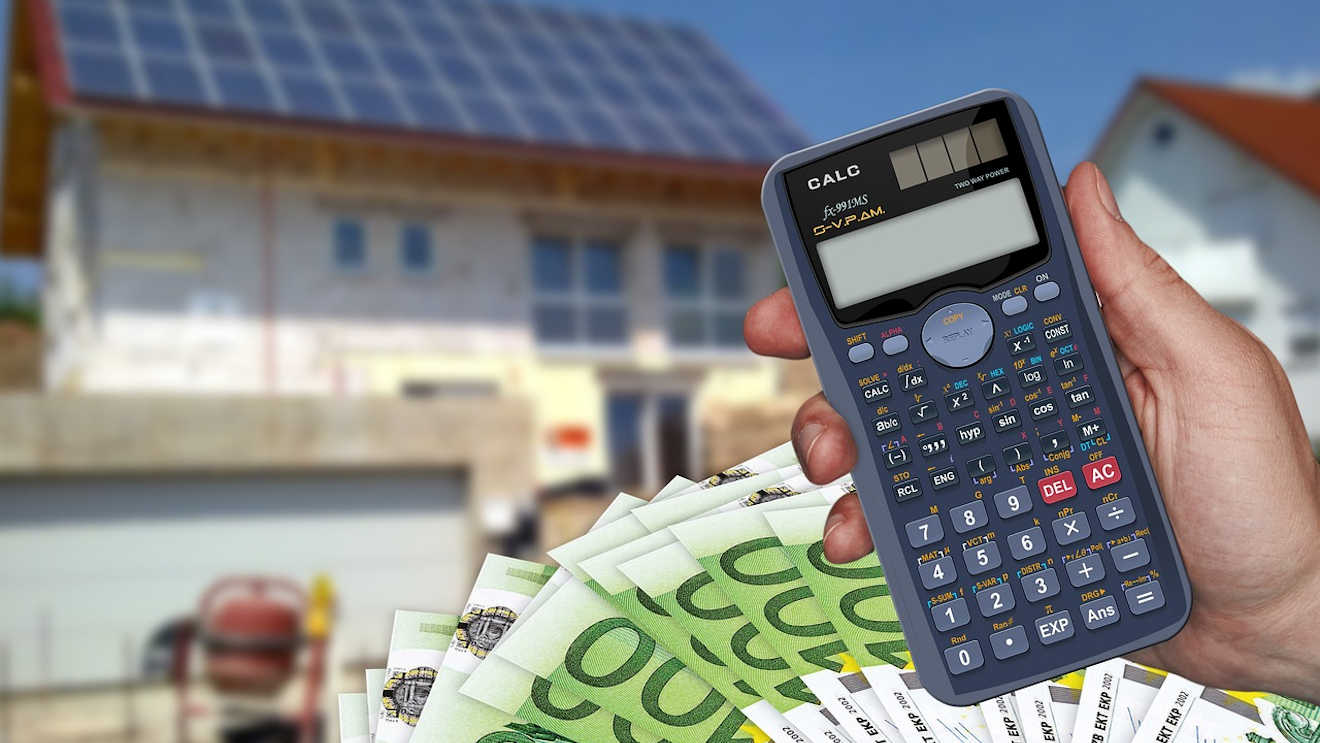
For some buyers, the dream is to restore an old French farmhouse, renovate a village house or build a new home from scratch. These projects can be rewarding, but they also require careful budgeting and an understanding of French planning regulations.
Renovating an older property can provide an opportunity to create a beautiful home, particularly in areas where traditional stone houses remain relatively affordable. However, I would be very cautious about buying a property requiring major structural work without obtaining professional advice.
Roof repairs, damp, outdated electrics, drainage problems and poor insulation can all add significantly to renovation costs. French energy-efficiency requirements are also becoming increasingly important, particularly for owners intending to rent out their properties.
Before purchasing, obtain realistic estimates from qualified builders and check whether the proposed work requires planning permission or a prior declaration of works.
Building a new house is another option. It allows you to design a property suited to modern living, with better insulation, efficient heating and fewer immediate maintenance problems.
However, the cost of land, utility connections, building permits, professional fees and landscaping must all be included in your budget.
Whichever route you choose, I would allow a contingency for unexpected costs and delays. Renovation projects almost always involve a few surprises, and they are rarely the pleasant kind.
Explore this topic:
- Property Renovation in France: Advice from an Architect
- Building a New House in France
- Cost to Build a House in France
- Building a House in France: Buying Off-Plan
8. Buying an investment property in France
Buying property in France as an investment requires a different approach from purchasing a home for personal use. Rental demand, location, running costs and the potential for capital growth all need to be considered.
Having worked in the holiday and long-term rental market in Southern France for many years, I have seen that the properties which generate the best returns are not necessarily the most expensive or attractive houses.
For me, the most important consideration is the relationship between the purchase price and the rental income you can realistically achieve.
A property purchased for €200,000 and generating €15,000 a year in gross rent may be a more attractive investment than a €500,000 villa generating €25,000. But gross rental yields only tell part of the story.
You also need to allow for maintenance, property taxes, insurance, management fees, periods without tenants and any financing costs.
Location is critical. Properties close to active towns, transport connections and popular attractions generally have a broader potential rental market than isolated houses in remote villages.
I would also avoid spending too much on refurbishment. If you are buying primarily for investment, the objective is to purchase at a sensible price, make practical improvements and start generating income.
Explore this topic:
- Should I Buy Investment Property in France?
- Best Places to Buy Investment Property in France
- Rental Calculator: Investment Property in South France
9. Buying a holiday rental property in France
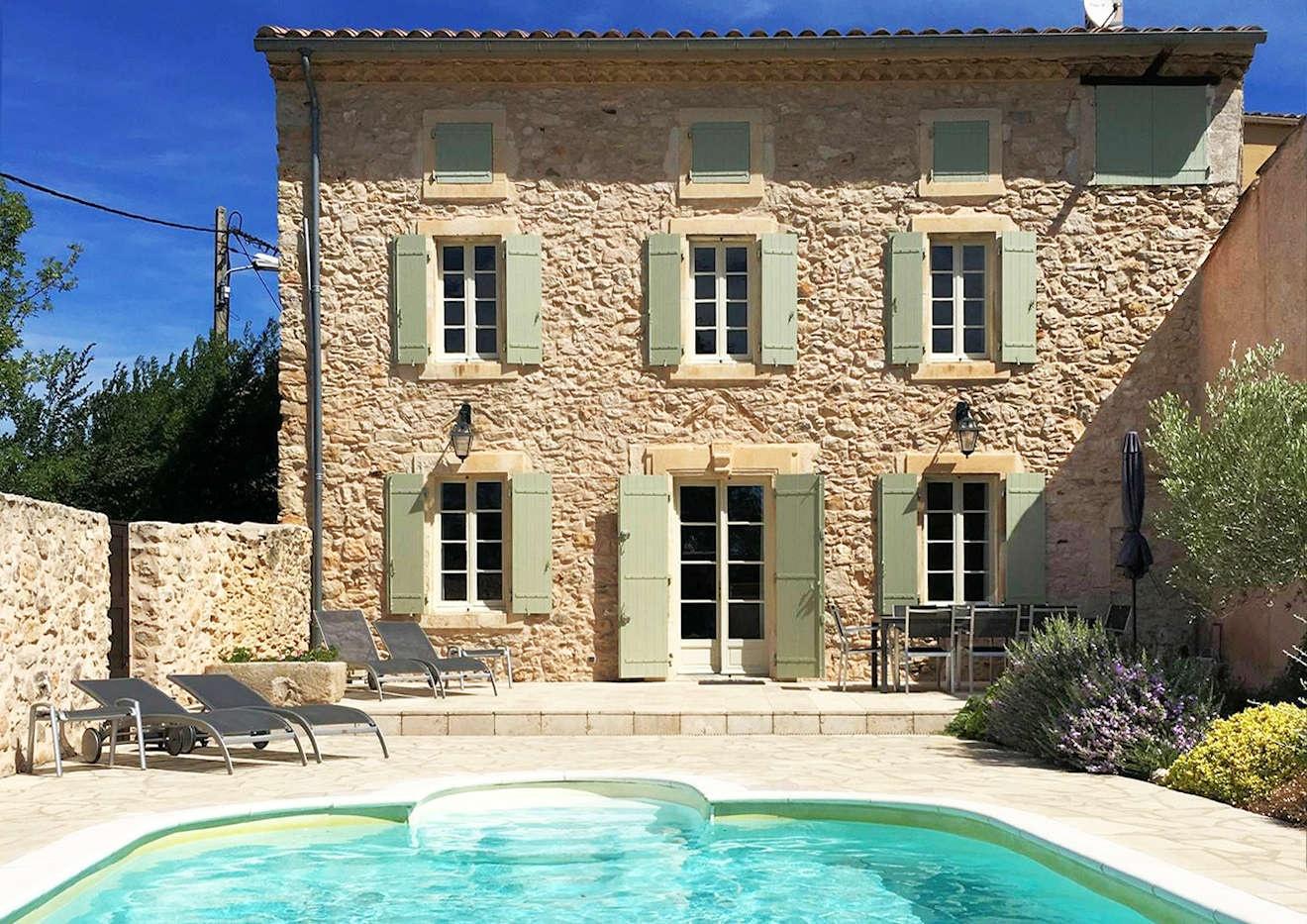
Many foreign buyers hope to cover some of their running costs by renting out their French property to holidaymakers. However, a successful holiday rental depends on more than finding a house with a swimming pool in a sunny location.
From my experience, location, accessibility and the facilities offered by the property make an enormous difference to rental demand.
For a holiday rental in Southern France, I would look for a property within easy reach of the Mediterranean beaches, preferably close to a lively village or town with shops and restaurants. A private swimming pool, modern kitchen, comfortable bedrooms, air conditioning and reliable internet are all valuable features.
Easy access from an airport is another advantage, particularly if you want to attract visitors from the UK, Ireland and Northern Europe.
One opportunity that is often overlooked is combining summer holiday rentals with longer winter lets. A property can generate income from weekly holidaymakers during the summer and monthly tenants during the quieter months.
However, don't assume that a house will be rented throughout the year. Seasonal demand, local regulations, cleaning, marketing, maintenance and management costs all need to be factored into your calculations.
If you are buying primarily to generate rental income, choose a property that appeals to paying customers rather than simply buying the house you would most like to own.
Explore this topic:
- Buy to Holiday Let Property Investment in France
- Rental Calculator: Investment Property in South France
- Renting Your French Holiday Home Long Term
- Marketing Your Holiday Home for Long-Term Lets
10. Final checklist: choosing the right French property
After researching the market, visiting different regions and working out your budget, the final decision often comes down to whether a particular house really suits the way you intend to live in France.
Our advice is to spend time getting to know the area before committing to a purchase. Visit outside the summer months, check local amenities, investigate transport connections and speak to people who already live there.
Before making an offer, I would ask myself the following questions:
- Is this somewhere I would genuinely enjoy living throughout the year?
- Are shops, healthcare, restaurants and other essential services within easy reach?
- Have I compared the asking price with actual recent property sales?
- Have I obtained an independent survey and checked the condition of the building?
- Do I understand the annual property taxes, heating costs and maintenance expenses?
- Will the property still suit my needs in five or ten years?
- If I needed to sell, would there be a reasonable market for the house?
Perhaps the most valuable advice I can give is to rent a house in France before you buy one.
A six-month rental can tell you far more about an area than a two-week property-viewing trip. You will discover what the village is like in winter, how far you really are from everyday services and whether the lifestyle matches your expectations.
Buying a house in France should be an exciting experience, but there is no need to rush. The right property is worth waiting for.
Explore this topic: